Monday, October 30, 2006

“I know the heart of life is good…”


"Pain throws your heart to the ground
Love turns the whole thing around
Fear is a friend who's misunderstood
but I know the heart of life is good..."


I don't think John Mayer was thinking about birth when he wrote this song. But I played it over and over again on my drive home from a beautiful birth last night.

Why was this the song I needed to hear after such a joyous and swift birth? I just knew that this was going to be a powerful week. There was going to be sadness to balance the joy. I could feel the phone call coming...

“Is it normal if you don't feel the baby move at 17 weeks?”

And to think I bought the book about Spirit Babies just the other day. I’d been already preparing for this phone call.

Then, this morning, an email came from another wonderful, powerful woman, spilling over with loss and fear…

The Spirit Babies book was at my left hand, waiting for me to pick it up.

Later that morning, my pager vibrated as I sat having tea with another amazing woman, nursing her five-month old baby, finally shaking free of the fog of postpartum. I made a quick phone call.

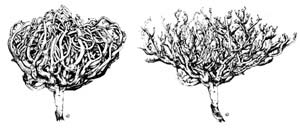
A quiet voice on the phone confirmed last night’s fears. My memory flashed to images of her first birth, where she was strong, singing mystic songs in labour. She leaned over a bed, holding onto a desert herb, the kaff Maryam, or "Mary's Palm." According to Arab tradition, the Virgin Mary clutched this herb in her hand while "suffering in childbirth", its branches unfolding as her labour progressed.

On some days, when I’m working with clients, we skim the surface of life, talking about the technicalities of birth, what to expect, our biology, logistics…

But on other days, we’re almost forced to delve deep into the spiritual meaning of this thing called “birth.”

Today, I made phone calls, sent emails, and searched for meaning like someone in the desert searches for water. I need the kaff Maryam in my hand…so I can help these women through the challenges of this week.

Just as I had read the book on Spirit Babies only yesterday, then attended a joy-filled birth, before the new week began to unfold… we are all given the tools to deal with these challenges in advance – miraculously. Our hearts just need to be open enough to hear the lessons as they arrive, to make sense of it all, and to remember that “the heart of life is good.”

Oh, Maggie!

The wind blew the clouds and rain away, giving her the sun’s heat upon her back, and showing her the first snowfall on the mountains.

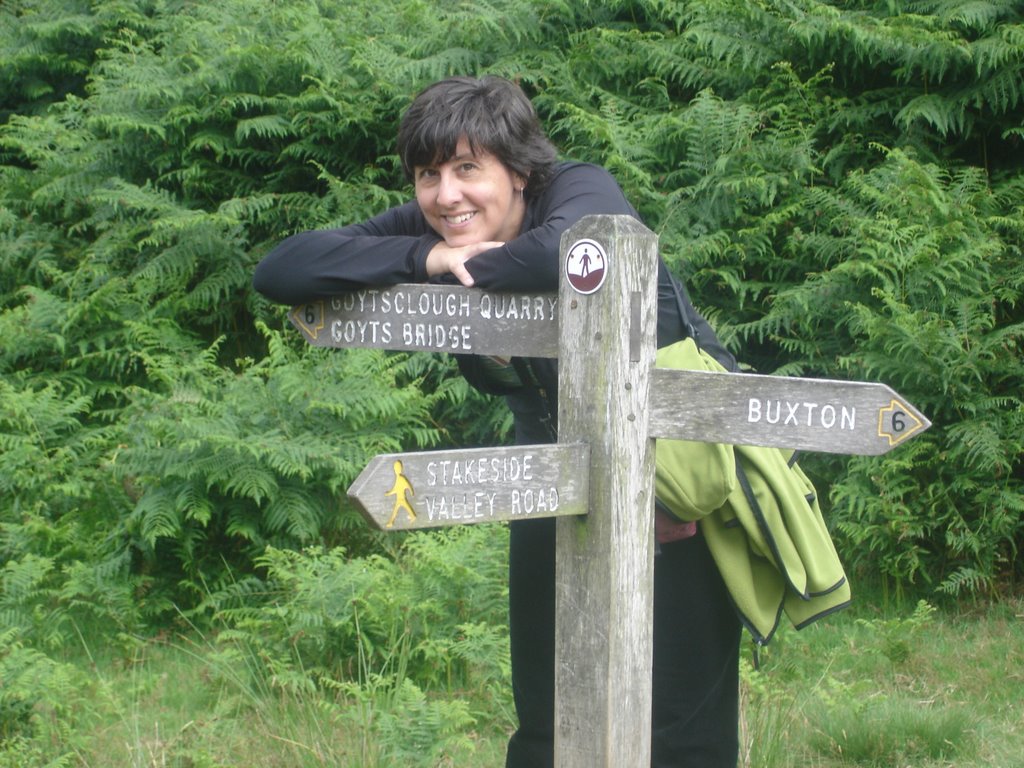
We stood, with the tourists, at the Queen Elizabeth Park viewpoint. She stood, leaning over the bench, pointing out the dried candle wax, the other pregnant woman, the babies, not really looking like a woman in labour.

But she was…

Oh, Maggie! She’d been through so much pain in this pregnancy, and many labour “warm-ups” (let’s not call it false labour any more!) and she was still unconvinced that this was the real thing.

But it was…

At lunch time, she’d been feeling well enough to grab a Subway sandwich, challenging the sandwich artist over the ins and outs of the 2-for-1 deal. Now, on the hill, only an hour later, it felt like we should at least call the hospital and put them on alert.

By two o’clock, we were at the hospital – “doozies in the car.” By 2:30 she was “in the zone.” And just before three o’clock, we were upstairs by the elevators, working through another contraction.

“OOOOOOOOOOOOOO,” she called, head buried into her husband’s chest, as a little boy walked past. She must have seen his feet, because she quickly said, “OOOOOO, I’m a ghost!!” Her need to reassure the boy was stronger than the power of the enormous contraction.

Everyone in the hallway laughed! That’s Maggie – so strong, so great, so quick to lighten the mood for everyone else.

She was only in the birthing room an hour before her beautiful son came into the world.
Smiles! Such joy!

“Jacquie, that wasn’t bad!”

“Whaaa!!” says baby.

Mum and dad talk with baby…
“It’s so bright!”
“I’m glad you decided to join us!”
“Your chin is so cute!”

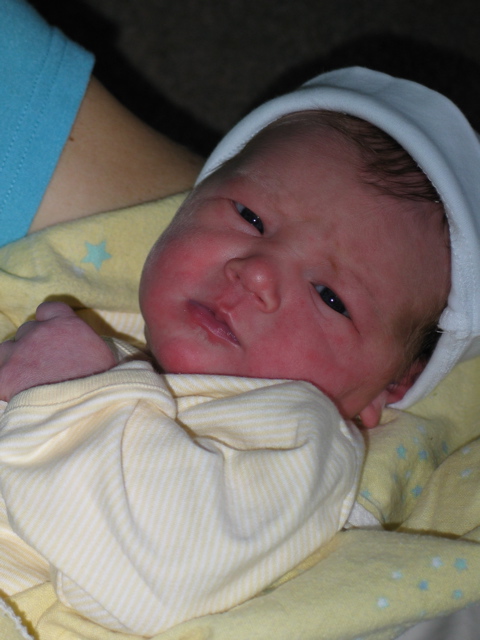
What a wonderful day to be born, Benjamin!

Saturday, October 28, 2006

Duthies goes down a notch

Okay, I've been a Duthie Books fan all my life. It's an independent book seller in Vancouver, with well-read employees, a great book selection, etc. etc. I bought the new Zadie Smith novel, On Beauty, then headed to check out the pregnancy books, as usual. I headed to where they usually are...and stopped, mouth open... There was a massive product placement of the What to Expect When You're Expecting series (good only as doorstops), The Baby Whisperer (don't get me started!,) and The Caveman's Pregnancy Companion (Oh, dear! Do they really think men are happy to be treated like morons?) I had to walk out...

So, I popped into Chapters today to see how they were doing...and didn't find ONE What to Expect book, found a few Sheila Kitzinger books, and purchased two very obscure and interesting-looking pregnancy books (I'll let you know...) Here was a chain store with a selection that was certainly better than Duthies.

For a consistently good selection of pregnancy books, grab a chair and sit at Banyen Books on 4th Avenue. Now, if we could just get Tanglewood Books, with those wonderful creaking wooden floorboards, to stock amazing pregnancy books...then I'd be happy.

Friday, October 27, 2006

And then there were Ten

There have been 10 babies born since we returned from our summer holidays, only one of them a girl! Welcome, and congratulations to all!

Snapshots:

Kate’s birth - Nurse: “This little one is going to give us all grey hairs!” (Said on the twentieth fetal heartrate dip before gorgeous, bright-eyed Kate arrived)

Connor’s birth - Mum: “Sorry to get you guys out of bed.” (Said to Grandma and Sister, Dad and Doula, Doctor and Nurse near the end of her 3 1/2 hour labour)

Emmet’s birth - Mum: “That wasn’t bad.” (Boy, did she motor! Moved from standing, to sitting, to squatting, to shower. So, so fast!)

Lochlan’s birth - Doctor, smiling: “What is she on?” (Mum chatters away happily in shower, then stands for birth)

Liam’s birth - Nurse: “She couldn’t possibly be pushing. I just checked her and she was a fingertip dilated.” (Baby born 45 minutes later)

Cameron’s birth - Mum: “It’s just like a marathon - some good bits, some bad bits.” (Said half-way through the 7 hour labour)

Oliver’s birth - Friend, calling from downstairs: “Dinner’s ready!” (She hadn’t noticed that the baby was just about born...by the stairs)

Klein’s birth - Head Nurse: “Has your nurse done her rural Africa trick with the sheet?” (Baby eventually waved all red flags and asked for immediate exit - leading to a joyful, laughter-filled OR)

Adam’s birth - Mum: “I think today might be the day.” (Baby born 43 minutes later, unexpectedly at home)

Oscar’s birth - Mum: “I enjoyed the day. It was a good day.” (Said while nursing baby for the first time, triumphant)

We wrestle angels

On my way to see a client the other day, I drove past the beach, and watched the sailboarders fly through the October waves. Last night, the image returned as I listened to Michael Symmons Roberts on the radio, reading from his own poem about observing sailboarders:
"These men wrestle angels. Each now sits on / an enormous wing waiting for the winds to rise"

For me, it always comes back to labour. For, in labour, we wrestle angels. We struggle to blend reality with expectation. We skim the ecstatic knife edge between pleasure and pain. We emerge, changed utterly.

Thanks to Deb, Elaine, Sheena and Betty - the four midwives who helped me wrestle the angels

Monday, October 23, 2006

Searching the past for ritual

Over the years, I have been a witness to many birth rituals. Often, these are rituals drawn from different cultures. Those that spring to mind...

A Tibetan woman had a long labour, followed by a cesarean birth. Outside the operating room waited two beaming monks, their robes a bright contrast to the hospital walls. After the baby was born, the father asked that the first piece of cloth to touch the baby was a silk fuschia prayer shawl that had been blessed by the Dalai Lama. There, in the operating room, was one spark of colour. The birth shifted from medical to spiritual.

A Sikh woman laboured, standing by the bed in the hospital. While the nurse was ritually laying out the delivery cart, gloved and masked, the husband ritually laid out a prayer table. The altar of medicine looked out of place.

A Japanese woman reached down for her baby, pulled him up to her breast, and named him. "She must tell him his name as he comes to her breast," whispered her husband.

But there are also historical rituals to be considered...

At the Victoria and Albert Museum in London, a current exhibition titled, "At Home in Renaissance Italy," highlights the rhythms and rituals of Renaissance living. One highlight is a portrait of a noblewoman, wearing a marten's pelt with a jewelled head. This fashion accesory was believed to act as a guardian to women during pregnancy and childbirth. The marten was thought to conceive through the ear and give birth through the mouth. Much easier!

The women were also pampered after the birth, their food being carried to them on ritual birth trays, lavishly painted with protective images.

Pregnancy is a wonderful time to explore these cultural and historical rituals, and perhaps foster a stronger connection between peoples and times.

Groaning Cake


In our last book club meeting, we discussed The Birth House, by Ami McKay. We ate groaning cake, talked about birth, the medicalization of women's bodies at this most natural time, history, social change, and our own lives. We were strengthened by the stories of these women at the turn of the century in Canada, their sisterhood, and the quiet yet bold way in which they kept their commmunity together. I hope you read this book.

The tradition of the groaning cake at a birth is an ancient one. Wives' tales say that the scent of a groaning cake being baked in the birth house helps to ease the mother's pain. Some say if a mother breaks the eggs while she's aching, her labour won't last as long. Others say that if a family wants prosperity and fertility, the father must pass pieces of the cake to friends and family the first time the mother and baby goes to a public gathering.

2 1/2 cups flour
3 eggs
2 t. baking powder
1/2 cup oil
1 t. baking soda
1/2 cup orange juice
2 t. cinnamon
1/4 cup molasses
1/2 t. ground cloves
1 1/3 cups sugar
1 1/2 cups grated apple
1 t. almond extract

Sift dry ingredients together. Add apple. Beat eggs. Add oil, orange juice, molasses and sugar. Add to dry ingredients. Mix well. Add almond extract. Bake at 350F. for 35-40 minutes. Makes two 9x5 loaves or 18 muffins.

Monday, October 16, 2006

Boundary Bay Baby!


Perhaps the fastest baby of the year...a little boy has made his way into the world in 43 minutes!
No time for a car ride to the hospital...
No time for the doula to get there...
Just a mother and a father to receive this shining spirit...

(Well, I flew up the stairs one minute after the baby arrived, just a step behind the paramedic)

I think everyone smiled so much yesterday that we all had sore faces!

Congratulations to Sarah and Mark!
Thanks to all the paramedics and the Infant Transport Team, especially for listening to my client and giving her privacy.

That was a day filled with joy!

(2009 Update: This mum has since had another baby...this time planned at home with a midwife. Phew! An altogether more relaxed outcome.)

- Jacquie Munro, Vancouver Doula

Tuesday, October 03, 2006

650


I completely missed it. I passed the six hundred and fifty baby mark a while ago, but didn't stop to think about how many babies that REALLY is... Well, they're not all babies now. Many are heading off to high school or university, but close to 70 wee ones are still waiting for their first birthday.

Photos arrive as each baby reaches his or her birthdays. Christmas cards arrive showing long-limbed children I hardly recognise. But I never forget a labour. Those flashbulb moments remain strong in my memory.

I can see the woman cry out, "I can't do it any longer!" I rubbed her back, and said, "You ARE doing it!" And she replied, "No, I mean, he's passed out and I can't hold him any longer!" Her dear husband had fainted while we'd been in the middle of an earthquake, and she had been holding him and pushing at the same time.

I can see another woman roaming Queen Elizabeth Park, squatting by trees, waiting for her husband to return from his final immigration hearing. I can see him running across the park towards us, calling, "I will be Canadian!"

I see myself in the backseat of a mini, holding a labouring woman, on the hottest day of the year. Her partner is driving us through the blistering streets. We pull up alongside a throbbing car. The man calls out, "Are you all weird or are you in labour?" We all laugh.

I see another woman hold open her oven door to check on the roast beef. In between contractions, she prepares Sunday dinner. We are told we can't leave for the hospital until we have all eaten. Yorkshire pudding and gravy included. The baby arrives 15 minutes after we step into the birthing room.

I see another woman, deep in labour, smiling as her contraction ends. "I love the breaks - they're just like the best cup of tea!" Her husband flies through the door, stripping off his clothes. "I fell through the ice!" he exclaims. (Long story)

These are only five moments out of the thousands of moments remembered in six hundred and fifty amazing births. Thank you for letting me be a witness to these births, and one of the guardians of these memories.

Oliver is 22 hours old


after a powerful labour
flowed through a powerful woman -

and dinner was just ready,
a little boy in Richmond
was born in the hallway
by the stairs,
greeted by his awestruck parents

and five smiling women.

now, did everyone get their pasta?

Monday, September 18, 2006

The Inner Journey of Pregnancy

During a client’s first pregnancy, I’m continually trying to think of the best way to help her prepare for this life-changing event. Over the months, we certainly talk on the phone about her physical changes. But her emotional changes, her expectations, values and priorities are of even greater importance.

Often, a woman’s inner wisdom is at odds with the societal standard, and my job is to help strengthen her confidence. I have to help her to trust her body’s ability to birth and shut out the voices shouting, “You really should have that test” “You’ve never done this before” “Everyone has a Diaper Genie” “Buy bottles in case breastfeeding doesn’t work.” The competing voices can almost drown out her “I can do this,” and weaken it to become “I’m naïve to think I can do this.”

To have an ideal first birth, a number of factors have to be firmly in place. A perfect example was recently outlined by a local midwife, who wrote “I know if I have a 28 year old woman who has not been sexually abused, who really wants to be pregnant and does so easily, is a successful artist working in a home studio, does no prenatal screening, eats healthily and exercises moderately and regularly, and plans a home birth with the support of her partner, that she is going to have a wonderful labour and birth.” This hypothetical woman would have a strong sense of self, a willingness to make choices outside the societal norms, and would make the job of the doula and midwife look easy.

How do we help the woman who is over 35, perhaps embarking on this pregnancy on her own, or becomes pregnant shortly after entering a new relationship, or is finally pregnant after enduring years of fertility treatments? What if the woman has been subjected to emotional or physical abuse in her life, has been marginalized in her life or job, or is still struggling to define her boundaries?

In the North American society of 2006, the nine months of pregnancy seem far too short to deal with all these issues. The woman often spends her pregnancy on an external journey of moving house or renovating, buying a new car, buying baby gear, fighting for maternity benefits, choosing and attending the right classes (prenatal, fitness, yoga, etc.), and preparing to entertain any number of visiting family during the postpartum period. Society places little priority on the inner journey of pregnancy.

Where is there time for introspection? Where is there time for long walks on the beach with wise women or a supportive partner? Where is there time to read novels that quietly address the emotional issues at hand? Where is there time to dance, to sing, to draw, to express the inner journey?

Perhaps the best preparation for birth is to use the nine months of pregnancy wisely. Relish this period, which bridges the gap between two dramatic stages in a woman’s life. Both literally and figuratively, take time to follow eastern philosophy and “breathe for the hollow organ.” Breathe in deeply, wait, be still, exhale, then wait for the body to take the next breath. Live in the moment. Listen to your body and get out of the fast lane of the 21st century.

This inner journey of pregnancy can be profound. If a woman listens to her inner wisdom, surrounds herself with strong women and men who will support her choices, honours her body’s need for stillness, and sees time as her ally, she may yet have the birth that she wishes. It can also change her entire outlook on life. And, ultimately, it can give her the confidence to raise children with grace, laughter and understanding.

Friday, August 25, 2006

Picnic at BC Women's

I was concerned that she'd think I was crazy... "Let's meet at the hospital, on the hill across from the emergency entrance. Bring a picnic and a blanket." It just seemed the right thing to do on this beautiful day in August. How else could I create a sense of safety, close to the hospital, yet far away? High up on the hill, with lovely green grass all around, trees to lean on, a hill to climb, a place to labour without being watched.

I arrived, and there they were, looking just like a couple on the hill having their lunch. Lovely cheese, crackers, fruit, sparkling juice... A soft blanket and a lap to lean on... Contractions every five minutes. She'd rest on her side for a while, then walk for a while... We'd talk about what to expect...how second babies take their time at first, then fly out. We were in the perfect place, ready to dash inside whenever the labour became stronger.

It was so joyful to be a witness to this labour on the hillside.

"Let's go in," she said after a few hours. I had timed it so that the "fancy room" would be available, after all the new babies had been discharged, and everyone had taken their lunch breaks. We were in luck...

Sun filled room, glass tiles, the shower, a birth ball, arms to hold, primal sounds...

...and the baby came like a rocket after a whirlwind of labour. She did it! This was the healing labour that I'd wished to nurture.

The last scene...she's sitting up in bed with the take-out menus spread before her. "Which do you think? Steak? Baby-back ribs?"

This was good. Really, really good.

Wednesday, August 23, 2006

Into Dad's Hands

Dad caught the baby...then mum writes...

"...I haven't called as there have been no questions, no stress, no concerns. It has been unbelievable. I was prepared for chaos and tears and frustration and there hasn't been any. Just lots of quiet time getting to know one another, long walks in the neighbourhood in the early evening and tons of smiles. I still have moments where I have to pinch myself when I look at him, he just seems so unbelievably perfect to us.

I want to thank you so much for being there with us during his birth. There were many times throughout the experience when I was so relieved to have you there with us. It was an enormous comfort. You had the words I was looking to hear and I thank you for them. I was very lucky to have had my path cross with yours. I know we will have another opportunity to work with you again in the future and I look forward to it!" - Cohen's mum

Tuesday, August 22, 2006

Lambing time...


We're just back from the spur-of-the-moment trip to the UK, to hike, see the new lambs (saw one set of twins feeding), stand on cliff edges, and drive the one-track roads (yikes!) in Derbyshire and Yorkshire.

We also cheered as our son's band won at the World Pipe Band Championships - absolutely amazing!

Now that we're home, it seems like a wonderful dream. The phone calls have been coming in thick and fast with updates on all the most recent babies. I've been fielding questions about pooping, breastfeeding, throwing up, whether grunting is normal, how to introduce solids, parenting 2 year olds, toilet training...

I'm home for a wild week of pre and postnatal visits, then off to Hornby for our "regularly scheduled holiday."

Then the busy Fall baby season approaches. Truly lambing time...

Sunday, August 06, 2006

UK Bound

Another amazing week...four babies born (stories later). Late Wednesday night, my husband paged me while I was at the hospital. I was sure he was going to tell me that another client was in labour. But he phoned to say that he'd booked seats for us to fly to England on Sunday. Wow! I picked up my passport on Thursday...attended a bliss-birth on Friday...washed and ironed on Saturday...and here we are, ready for the airport. This will be our first solo flight (aka childless) together since our children were born (23 years.) Not a bad anniversary present!

- Jacquie Munro, Vancouver Doula

Friday, July 28, 2006

Summer Heat


I've just realized that I haven't written about any of the births this month. It must be summer...

Six strong women. So many stories...

Andie's birth - Her mum was described as "enchanting in labour" by the gentle doctor. Memories of flowers, swishing water in the tub, jokes at 9cm... Such a joyful day with all the family waiting...laughter...

Weston's birth - Standing, moving, power...then those shoulders, such a challenge. Mum's grace and strength in the middle of a medical whirlwind... Finally, safety and peace.

Nicholas' birth - The granite countertop, swaying hips, fans whirring, infinite patience, acceptance... Now he sleeps and feeds and sleeps and feeds... What a journey this past year has been...

Ryan's birth - Flying car down 33rd, honking, passing... 6cm progress in 2 hours... "You know it's safe when mum and doc are comparing their toe-nail colours..."

Julia's birth - To induce: take one hot day, a boat ride, a sudden frightening squall, a car being towed... The result: A labour like a fast, stormy sea...and a baby that slides out, shimmering...

Oliver's birth last night - Sitting, standing, water, sound, stillness, movement, quiet, power...whispers of encouragement. Then, like a tribe, the women gather round, chanting "pant...little pushes...pant...pant..." "You could have had that baby in Malawi," says dad. We clean the room, turn down the lights, and slip away...

Six strong women. Two strong girls, four strong boys. What a journey awaits.

Tuesday, July 04, 2006

After Zoe's Birth


during the birth
my hands are the hands of all women
smoothing the lines between past
present
and future

the women are with us

after the birth
we hear the midwife
snap clean sheets
see her climb up
onto the high bed
to smooth the corners

you climb up
babe in arms
and we slip silently through the door
between life and death
to join all the mothers under the moon

Friday, June 09, 2006

One Week Old


But, despite the tears...
"Just look at her!"

"Tears and Rain"


Okay, I’m going to share some secrets about what goes on behind closed doors. Before pregnancy, no one tells women that there are going to be a lot of tears. All they see are the groups of shining skinny women pushing strollers (complete with a sleeping baby) along 4th Avenue, Starbucks cup in hand, laughing. What they don’t see is the anxiety, the tears, the loneliness, and the loss that women can experience as a result of this enormous change in their lives.

I’m glad pregnancy is nine months long. It takes that long to work through the issues that crop up...family boundaries, financial pressures, relationship issues, old wounds, loss of mobility, body image, career choices, birth worries... Women look to their baby’s birth as the end of the process, only to find out that it’s just the beginning. Then all the same issues resurface, in addition to a general sense of loss and loneliness...oh, and a crying baby.

Then I get the phone calls. Three or four women a week call me to say they are sitting in a puddle of tears, surrounded by crumpled tissues. They ask, “Is this okay? Is there anyone else feeling this way?” Oh, my goodness, yes...most everyone! The problem is that we’re all sitting in our houses, alone and apart.

Our support network of coworkers is gone (and I thought I hated to go to work!), our husbands are at work (so mad at him going to work!), the house needs cleaning (isn’t that what I’m supposed to be doing to justify staying at home?), the laundry is piling up (who knew babies could generate so much!), and people keep visiting and visiting (expecting me to make tea as they dole out their unsolicited advice.)

I’m tired and anxious just reading what I wrote!

When my daughter was born, I was fortunate enough to have a mum who lived only a block away. She would come by each morning, ironed laundry in hand, ready to clean my house, prepare the meals, and leave. I can’t believe that she didn’t say anything about what I should be doing, how I should be holding the baby, what she wanted... She would just kiss me and leave. Wow! That actually sounds like the best postpartum doula (which we all need and deserve!) But I still needed help.

Then, an amazing woman forced me to attend a mum’s postpartum support group. “It’s Wednesday at 10am...be there, clothed or not!” Once there, my daughter promptly threw up all over me. If I’d been at home, I would probably have cried over the loss of the milk that I’d worked so hard to get into her little body. But, surrounded by all the women, who were reaching out to me with towels, blankets, and tissues...I just had to laugh. That day, I sat next to the woman who would become my best friend. We have had lots of tea and tears and walks since that day almost 23 years ago.

Only yesterday, she said, “I wouldn’t have made it through these years without you. I wouldn’t have stopped in the middle of the day, and taken time for myself without your encouragement. I wouldn’t have sat down and read a book during my baby’s nap time, without you phoning me and telling me to SIT DOWN. I felt I had to account for every moment that I wasn’t out working or cleaning the house, or preparing meals for the family.”

Where did this mother-guilt come from?

Maybe I’m just a lazy thing, but I believe we need to be guilt-free about giving time to ourselves as mothers. We need to set firm boundaries with our extended families, to selfishly protect our new family of three. We need to allow ourselves to take a nap, stop for tea, read a good book, take a slow walk, buy ourselves a treat. We need to listen to our bodies and our wisdom, and honour our intellect and our intuition.

We need to ask for help from the community of women around us. We need to open our doors and gather...so we can sit in one big puddle of tears and laughter...together.

Thursday, June 08, 2006

Taking Stock (or living in a bubble)


It’s good to take stock of things every once in a while. Change happens so gradually that you often don’t notice until you stand back and observe the differences. Strangers are often the first to notice changes in our children. When did my daughter change from looking like her father, to looking like me? When did my son get taller than his sister who is almost four years older than him? Somehow I missed seeing the changes in the moment.

It’s the same regarding birth practices.

When I started working as a doula, shaves and enemas were still routine. Women were given IVs, and continuous monitoring was deemed necessary. Women still had to write militant-sounding birth plans in order to achieve their goals during birth. Informed consent and family-centred maternity care was a goal, not the norm.

Now, it’s only old books on library shelves (or U.S. television?) that perpetuate the myth that these practices still exist here in Vancouver.

Maybe I live in a bubble...but things have changed here in the hospitals over the past 20 years. Monitors aren’t routinely kept in birthing rooms. I rarely see IVs given without cause or consent, and the nurse is the first person to suggest “more juice so you don’t need an IV.” No one looks at me oddly when I shake my client’s hips or help her to squat. The doctor will do everything in his or her power to prevent a woman from tearing. The nurse and I can be so in harmony that we communicate with only our hands and eyes, and guide the labouring woman into the bath. The doctors and nurses now hire me for their births. No one seems to remember how to do an enema. The dad and family are welcomed with open arms. Pretty much everything that women used to include in birth plans are now accepted as normal practice (so we just don’t write them any more). Prenatal classes include more birth art than breathing. The nurse might put aside her paperwork, take photos lying down on the floor, and cry along with the family. The labouring woman and her family are truly at the centre of this new type of care.

Long gone are the scary matrons of old. Now, I know that the charge nurse will encourage my client to stay at home as long as possible. At the hospital, she will take my client’s blood pressure twice...then wait...calm her down...three times...until she gets a low enough reading to allow admittance to “the fancy rooms.” I know that if I don’t see our nurse for a while, she’s busy trying to advocate for my client. I know that if I get a hunch that something’s not quite right, the nurse will listen to me and take immediate action. Together, we have prevented many complications.

I’m lucky that most of the doctors and midwives that I work with have recommended me to my client. I know that I can call them at any time with concerns or questions. They also call and email me an equal amount. It’s such a seamless and collaborative process that I never noticed when it reached this level of cooperation. When did we grow up?

Wednesday, May 17, 2006

"Stumble into a pocket of grace"


A sand dollar lies beside my computer. It will remain there to remind me of this day of grace.

I witnessed a joyful first birth this morning - a triumph over fear. A testament to the wisdom of living in the moment, and taking each breath as it comes. The moment that will remain with me comes after the birth, while she was showering. We debriefed as she scrubbed her legs, just like it was a regular day. “That was a good day,” she said, shining and proud of herself. Her newborn son was in her husband’s arms in the other room. The “boys” voices could be heard beyond the sound of the water. Yes, that was a good day.

Later, I took advantage of the post-birth high and walked on the beach near my home. The tide was out for a mile, exposing the hard squeaking sand. I aimed for the international marker out in the bay, my feet tracing a line of respect between the embracing lovers to my right and the man looking for crabs by the water’s edge to my left. His naked body flashed in the sunlight. An eagle looked up as I walked by, tearing at his food. No sound but the wind. The water, velvet around my ankles. The white sand dollar almost floating on my curved fingers.

The walk on the beach, the birth...two examples of living in the moment. These moments of grace should come more often.

Sunday, May 07, 2006

Libby's Birth...shorthand...

8:30am - “Things have started”...15 minutes apart...this is prelabour.
11:15am - “Go out and have fun,” says Jacquie. Mild contractions.
Afternoon - saw a movie, did Granville Island
6:30pm - True start of labour. 5 minutes apart.
7:40pm - Jacquie arrives. Shower was great. Leaning over table. “It's hot in here!”
9pm - Every 4 minutes now... astride chair...standing...hip shakes... "Ooooo"
9:30pm - New level of intensity - to shower with birth ball “That feels better.”
10pm - "Crash" as shower curtain falls. Out of shower...music on...moving, moving...
Midnight - Another shower. Jac calls hospital. “Crazy busy here,” says nurse.
1am - At hospital. Water breaks at 7 centimetres. “Is that good?” Yes!
2am - Sitting, standing, squatting, warm blanket on shoulders... in shower... “Are you kidding me?” exclaimed after strongest contraction.
4am - Lovely long break...”So relaxed!” ...then pushing...
4:15am - Squatting by bed...then to bathroom...
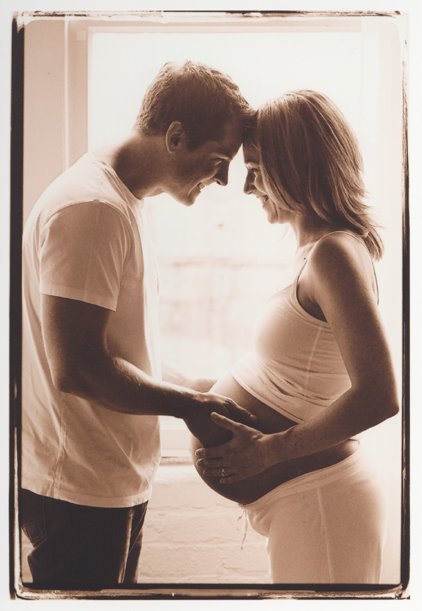
5:28am - Beautiful baby born...mum and dad facing each other, standing (just like their prenatal photo.) “We’ve been waiting to meet you!”

So many amazing labours in April...so many lessons learned...
Thanks to Kathryn Langsford for her photographic skills.

Lilongwe calling...


Funny to think how small the world is becoming...yet how deep the divide between the first and third world remains...


I just had a call from a new client. Typical, right?

After her initial email, I had written that perhaps it might be easier for us to chat on the phone. Little did I know that she couldn’t just pick up a phone and call me. No...she had to travel from her “village of mud huts” to the capital of Malawi, and spend the afternoon at the British High Commission waiting for me to wake up on Pacific time, then call from a satellite phone. While she waited, she read this blog. Wild!

We talked about her upcoming birth in Canada and what life is like for the pregnant women in Malawi...of fears...of the poverty and maternal mortality in Malawi...of our own hospitals here in Canada...of hopes and dreams, and memories of Vancouver...

Her own ideas of birth...

My ideas of life in rural Africa...

Both formed by stereotypes, television, myth...

Talking across the thousands of miles, we cleared the myths. I told her that episiotomies are rare here. She talked of the bizarre birthing practices in the villages. She told me about the blood-spattered walls of the local hospital. I told her that she may be able to remain mobile in labour, giving birth standing, squatting...limited only by her baby’s needs. I wonder what her expectations of birth are, what she sees in her mind’s eye, while visions of The Constant Gardener flit through my mind.

As we said goodbye, one memory of another client flashed into my mind. She was from Africa...tall, regal. Sitting on the toilet at the hospital, she looked up at me. “Jacquie, something funny happened.” Then she reached down and touched her baby’s head between her legs...and laughed! Stereotypically easy? The makings of a myth? Definitely not what you’d see on television.

I’m looking forward to meeting this new client. Thanks for the referral, Brooke!

Thursday, April 20, 2006

From "The Story," by Michael Ondaatje


i

For his first forty days a child
is given dreams of previous lives.
Journeys, winding paths,
a hundred small lessons
and then the past is erased.

Childbirth with Joy


“Joyful” was the first word that came to mind when I was asked to describe my son’s birth. At that time, in 1987, I was a self-proclaimed “west-side woman,” a studious and conservative academic...wary of anything east of Granville Street (don’t laugh.) So, for me to start spouting words such as “joy,” “transformation,” “energy,” or “empowerment” was a major departure from what people expected of me - or of what I expected of myself.

I have to thank an outspoken Scottish woman who sat next to me at a mum’s group in 1983 for pushing me towards a different view of birth. She told me about a new midwifery pilot project at Grace Hospital which cared for 4-6 patients per month. “Well, as long as they’re British-trained nurse-midwives,” I said. That’s my upbringing talking. As the only Canadian-born child in a British family, I held anything “British” as the gold standard. So, that’s why I chose midwifery care. No deep-seated granola philosophy...just a blind trust of anything British. Silly of me - but the result was amazing.

I was looking for greater respect in my second birth, and hoping for less medical intervention. What I didn’t count on was that this birth would shake my Type-A personality to the core and transform me. By trusting my body, my intuition, my husband, and the midwives I had chosen to support me, I had found the way to birth with joy. So there I was...the conservative west-side woman in labour...

I danced with my husband
The midwives left the room because they said the dancing seemed too sacred for their presence
Felt the energy of my midwives raise me up off the floor
Bizarre experience
Sat in yoga positions toning
Had I ever even heard of toning? No, it just came out of me
Sang in the shower
“Row, row, row your boat” and the Anglican “Gloria” - who knew that would come to me?
Visualized floating in Hanauma Bay
What an amazing memory of the imagined sun beating down on my back!
Became connected to every other woman
Past, present and future
And birthed my son without muss nor fuss
Just a leg thrown over the midwife’s shoulder

Who knew that there was poetry in birth?

And that is why I have been a doula ever since...
To help women labour freely...
To help women see the joy and poetry in birth...
To help women trust their intuitions and their body...
To transform these women into mothers who are trusting of themselves and their babies...
To create strong families...

What surprises and saddens me is that, after all this time, normal birth is still something that is difficult to achieve in our society. Medical caregivers often are surprised when a normal first-birth occurs. Enlightened doctors are struggling to maintain a positive atmosphere in institutions that increasingly view cesarean birth as totally acceptable. Midwives are finding some hospitals less supportive of their presence. And the women in labour find it increasingly difficult to have their voices heard in the over-crowded medical system.

How much have we lost if there needs to be a Campaign for Normal Birth spearheaded by the Royal College of Midwives in Britain?? How much have we lost if the family physicians are feeling lost, and midwives are burning out?

Think about it. Perhaps each of us need to be even more courageous in our attempts to support normal birth, so that the words “joy,” “transformation,” and “empowerment” become not condescendingly tolerated, but encouraged. The paybacks are life-changing - isn’t the battle for normal birth worth it?

Wednesday, March 22, 2006

Autonomy


Well, the newly renovated Holly LDRP (labour delivery recovery and postpartum) rooms have opened at BC Women’s. Fresh, clean, great glass tiles, most with windows...(ok - avoid Room 18 if you want to sleep - the lovely sunshine streaming through the skylights can be a bit startling in labour.) Now there are close to 30 birthing rooms at this hospital.

However, on any given day, there is still the possibility of being diverted to another hospital. There is either an unexpected baby boom in Vancouver, or every labouring woman is trying to get into the BC Women’s birthing suite. Soon there will be a campaign to alert Lower Mainland women to the joys (and quietude) of other hospitals. Admittance to the hospital will be like the old days when you had to prove that you lived within Vancouver city limits. So, if you live in Burnaby or New Westminster, consider the option of local hospitals, which are closer, and much less crowded.

I love attending births in all different settings, and I am awed to see how women are affected by their surroundings. It’s interesting how women’s movements differ in each venue. In a hospital setting, I don’t think I’ve ever seen anyone leap into a squatting position on the edge of a bathtub, tight in her husband’s arms. But on Monday night, at home, THAT particular position worked for my client. Without hesitation or comment, the midwife rolled up her pants and climbed into the draining tub, to support her. A few minutes later, the baby was born with the couple standing together, feet firmly planted on the ground. What power and autonomy!

I have seen autonomy in the hospital, but it takes much more effort from the labouring woman. One woman said to us, “I have to do this on my own. I’ll be in the dark in the bathroom. You can pop in to listen to the baby’s heartbeat - but don’t say a word. I’ll tell you when the baby’s coming...” This was her first birth. How did she have such strength and inner knowledge? She knew that her doctor, husband, nurse and doula were supportive of her decisions, whatever they might be. We all sat on our hands, silent in the room. Boy, that was challenging for three women!

One woman who gave birth at Burnaby Hospital last week said all the staff were incredulous at her wish to birth without intervention or medication. They couldn’t understand why she waited until she was 9cm before arriving at the hospital. “We’ve been waiting 5 hours for you!” But, she wanted to birth on her own terms - and she did, without fuss or complication. Well, there was a bit of excitement when she was earlier escorted up to the birthing floor by firefighters (who just happened to be outside when she arrived) who pushed her down corridors on an office chair!

So, new tiles, old tiles, windows or no windows, home or hospital... what matters is that we all need to flow with a labouring woman’s instincts. We need to put the woman’s needs first, be respectful, calm and unobtrusive. This is challenging in a busy hospital. So, if you’re pregnant, take a while to think about how we can help you to be autonomous and move freely in labour, whatever your setting.

Tuesday, January 24, 2006

Two perspectives


After reading my son's first university History essay, I've been thinking about perspective and truth. History is all about viewing the past through a critical lens. There are many truths. We must all make sure that we do not view history through a single homogenizing lens.

This is also true in birth.

When I attend a birth, I take notes. I try to avoid making editorial comments, or passing judgement. I am only an outside viewer. The husband and the medical staff see other truths, they view the birth from their own perspective.

The woman in labour lives her own truth. Those of us around her are guardians of her memory, and protectors of her emotional space, but we must be careful not alter her perceptions of her birth with our own observations, values or prejudices.

This is such a critical time in a woman's life. She is open and vulnerable.

What is her history that is being created on this day?

The post below is one woman's history. I wrote my own history of her birth on January 5th.

Two perspectives... But her truth is enduring...

Grandmother’s advice: “"A cup of tea and a bran muffin, and off you go.”

Thoughts on birth... by Andrea
Don’t we overplay most major events in life? Don’t we overuse words like “excellent”, “amazing” and “excruciating”? Use “never” and “always” out of context?

So why, for certain major life events, like marriage, birth and death, does it seem that we underplay them? Marriage, modeled after some Disney version, is for another blog, on another day. So, for now, is death.

But birth is current for me, and Rosie’s arrival has me wondering why, apart from humorous musings of people like Carol Burnett (to paraphrase: ‘It’s like this: take your upper lip, pull it out as far as it will go, now lift it up and pull it over the back of your head.”), no one says anything, really, about it. Other moms smile a secret, knowing smile, now that you are part of the club. The nurses at the pre-natal classes show drawings, with the mom’s face getting progressively… well, squiggly. I have never felt “squiggly”, so this didn’t mean much to me. The baby books say things like “How you might be feeling: anxious, in pain, worried about the baby.”

But no one said:

You will go inside, deeper than ever before, and a fog will descend on the outside world.

Time, as you now think of it, will change. Contractions will last for eternity, yet the hours will go by like minutes.

At times, you will not just be in your body: you will be your body.

The word “excruciating” will, at last, mean something to you.

You will have to reach for strength in places where you have never looked for it. There is no way to practice this.

And no one said:

If you are lucky, there will be a moment where heaven opens up and pours its light down on your child. You might even hear a moment of angel music.

Memories of a birth...
From the first birth, by caesarian section, I only knew a bit about the contraction part. Before I went under the epidural that time, I got up to move and had one brief and, to me, terrifying glimpse of immense pressure. Wow, I remember thinking. If that’s what’s in store, I’m just as well to go for the anaesthetic.

And yet, after, as I reveled in my healthy boy, I had regrets. There was such a slim chance we’d get pregnant in the first place, and now I had missed the opportunity for this supposedly life-changing event of a “proper” birth. Had I wimped out too soon? Had I done something wrong?

I was able to push these thoughts away and delight in my blessings. But when the miracle of pregnancy happened a second time, I felt that this – a non-anaesthetized delivery - would be part of the lesson. My life often seems to me to be a series of lessons missed, lessons repeated, and I felt this would be one. Or rather, I really, really wanted it to be one, and so it was.

So I dug through files and friends to find you again, Jacquie. My rational mind (what an Anishnabe friend would call “monkey mind”) said things like: You won’t need a doula this time. You’ve basically been through this before. You and Mike and some nurses can handle it. It will probably be another C-section anyway.

My instinct, which I am continually trying to listen to with more open ears, said, call Jacquie. So I did.

Several months later, as I entered the chute into labour about a week early, I found myself panicking, despite weeks of pre-natal yoga meditations and some conscious effort to prepare myself for the event this time around. Last time, I had avoided thinking about my fears, and the pain. This time, I try to welcome those thoughts, especially when Jacquie asks me, is there anything on your mind this time? Pain, I hear myself say. Yeah, she replies, it’s there. You just have to go through it.

But as the early contractions drew me into the cave, I had an initial fleeting panic. I’m not ready yet. I had other plans this week. This baby can’t really be coming now. And then the panic was replaced by the simple thought that, at any point, we could call Jacquie. So we did, and it was off to the hospital.

At first, I was as I say “in the cave”. You can stand up and move around in the cave, you can talk to other people. As dilation progressed – way, way too slowly for my liking – I was still able to respond to her suggestions. Gently rubbing my back; let’s shake those hips, dance that baby down; why not try the shower? In the moment, all movement seemed ridiculous to contemplate, and yet once encouraged, there was always new relief.

And there was her anticipation and reassurance. In the cave, you don’t try to stop your body, or, as my g.p.friends put it, ‘smooth muscle has the power of veto’. With every new turn, Jacquie is there. You’re safe. You’ll feel pain here, and here – it’s safe to feel that pain, go with that pain. (I had a yoga teacher once who tried to get us to meditate through itches, to get us not to lift a finger to scratch at a nose or cheek. “Go into the itch instead”, he would say. “Become the itch”.) So it is with the pain, except that I have no power to do anything but go into it, to become it, or to try to resist it, which doesn’t work. Let go, says Jacquie. Unclench your hands and see what happens. Not believing but trusting anyway, I let go my hands, which have been clinging to Mike’s, and feel myself drop. I’m dropping out of the cave. It’s time to push.

In the state of pushing, I am in a tunnel. I’m not just watching – I’m there. It’s brown in there, and as I push further and further I go through large, flat bubble-like things which are light brown. They are the pain. The tunnel, I now believe, is the birth canal.

The first time I push, I do so naively. The pain is quite something, and I’m just wondering how I’m going to manage it (assuming I’m not one of those moms who later says, almost blithely, well, it was intense, but he was out in 2 pushes), when I hear Jacquie again. She’s farther away now – no one can come into the tunnel with me, there isn’t room for one thing – but I hear her say: push through the pain; there is another side at the end – a place you can push off from. Some people say that it actually feels good there.

Again, I don’t really believe it, but since I’m going to have to push anyway, I go as far as I can. Descent, pain, pain, and – there it is! A push-off place! Now, the descent into the push is like wading through a gooey swamp, and at the end is dry land, terra firma, where I can gather my strength and really step off, back up towards the light, the room, breath, and water. It doesn’t exactly make me look forward to the pushes, but it gives me something to reach for, that will provide some relief and also sense that I am doing something, that we are going somewhere.

I wonder if I can put into words the incredible bonding I now feel to this woman, who can issue directions I don’t believe and have me follow them anyway, only to discover they are true. No, I don’t think I can put it into words.

I am pushing in series of 3-4 pushes per contraction. The tunnel looks the same each time, it feels the same each time and this is odd to me in the moment: why am I not feeling – or “seeing” - forwards progression? Why, indeed, is this kidlet seeming to move, and then slip back? I am tired and tiring faster still, I want to quit, I am not proud, I can’t do this, I feel free to tell anyone who will listen. And, there is Jacquie again, bringing Mike in with her – they are my pit stop crew as I come around the circuit and wait for the next contraction; they whiz around me getting water, moving blankets, getting cool cloths, and always, always, cheering me on, with an energy that only later strikes me as incredible, given that they do not have the adrenaline of labour, and have not had any sleep.

But even the pit stop crew can’t give me muscle power I don’t have. My legs and arms are starting to shake. I find myself mentally ready to push harder but physically, I am just giving out. Even my uterus must be getting tired – the contractions are coming less frequently now (how can that be? I wonder fleetingly) and seem less intense. And my will to descend again and again into the tunnel is waning. Unbidden, I am hearing the voices of women saying “just two pushes.. two pushes… two pushes”. I am starting to feel resentful – where are my two pushes? I’m working hard here! Where the heck is this baby? At one point I reach down to touch the head – I saw this in a pre-natal video, and always thought it must surely be one of the most inspiring things a mother-to-be can do. But as I touch it, all I can think is – great: now where’s the rest of her?

I am spent, but no one seems to be rushing to get me out of this. And now, without knowing where the energy comes from, I try to drown out the womens’ voices. I reach, and what I come up with is what the pre-natal yoga instructor said, as she had us pump our arms to banish our fears. We would pump, in and out, out and in, eyes closed, well past the muscle-burning point, and as we huffed and puffed and squinched our faces up, she would say, calmly, Keep going. You can do this. You will need all your strength and more. You can do this.

So I say, weakly, barely whispering: I can do this.

I can’t imagine anyone will hear me, but Jacquie does, she picks up the line and throws me an end and then pulls, hard: that’s right Andrea. You can do this. You can do this. I allow myself to be pulled along, and we go through some more contractions.

And at last, it is time for the baby to be born. The doctor will help, there will be an episiotomy: OK Andrea, one more push, and you’ve got a baby. Suddenly, the tunnel widens, I can sit up in it, and there is a doorway coming closer and closer. At the last minute, Jacquie calls into the tunnel “Andrea! Open your eyes NOW!

And I do, and there is the light of heaven and the moment of angel music, and my daughter, and my tears and laughter and joy all filling the room, as she, and I, emerge into the daylight, into the world.

Thursday, January 05, 2006

Birth is a challenge of the mind, not the body


Think of all the challenges that you have faced in your life - physical, emotional, and intellectual. You have been preparing for this for all your life. You will need to draw on all your life lessons to make it through labour. You don’t need to have experienced extraordinary pain - this isn’t like breaking a leg, or undergoing surgery. All you need is to have lived, faced difficult times, and struggled through to the other side.

Have you ever walked out of your house, and been amazed that everyone is walking about, laughing, doing their shopping, unaware of the challenges that you are facing? You have been facing such a trial that you have stepped out of space and time for a while. You ask yourself, “When will things go back to normal?” This happens in labour.

Have you faced adversity with your partner, greater than anything that you could ever have imagined, only to find that it has forced you to live more deeply and fully together, to love each other without masks or pretense? This happens in labour.

Have you ever lost a loved one, only to discover that you now see the world with greater clarity? You are surprised that there is intense joy even in the face of such pain. This happens in labour.

Have you ever had to take a leap of faith - into love, or a career challenge, into an exam, or even sky-diving? You are open, vulnerable, naked. You have given up control. Yet, how often do you find that you were a prisoner of your own fears, and that the reality of the leap is freeing? In relinquishing control you gain control. This happens in labour.

Are you surprised when you are in the middle of an emotionally painful event, realizing that you are going through what you most feared, and you are making it through, one moment at a time? This happens in labour.

Birth may be sacred, but it is something you will recognize. With support, you will discover so many things which are similar to your past challenges. You have been prepared for this.

"The baby tumbled/head over heels over head/down, down to Earth"


Jaya - one day old

Strength is not in her/but she enacts it as the wind fills a sail


Each and every birth I attend is a profound and unique gift. But sometimes, just sometimes, events conspire to make the day even more inspiring. Tuesday was exhausting, cathartic, and joyful for all of us. I can’t even put it into words. Even talking with my client just now, rare tears flowed when I shared some information about how the obstetrician had helped her. The obstetrician, with her private source of inspiration drawn from losses of her own, trusted my client’s need to do this her own way, and in her own time. The obstetrician agreed that if my client had been given an epidural, a repeat cesarean would surely have followed. We had all reached deeper than usual to support this woman fully through her life-changing day.

So here’s the basics on paper:
Previous cesarean for 10 lb baby
Arrived at hospital 6-7cm after 4 hours labour
Movement, shower, swaying, rocking, gas
Fully dilated after 7 hours at the hospital
No epidural, no forceps, no cesarean (to the staff's surprise!)
Just plain hard work, squatting, moving
Born after 3 hours pushing - an 8lb 5 oz girl!
"You have the most beautiful ears!" says the pediatrician to the baby

My experience was of a continuous flow between us, connecting us like a rope, a lifeline. Her husband would whisper encouraging words softly. With every single contraction I would say, “Breathe in strength...you can do this...breathe out...you are safe...deep breath in...blow it away...breathe in for baby...blow it away...deep breath in...you are safe...you can do this...” On and on, hour after hour, one contraction at a time. Resting in between: “Feel how amazing the rest is, your head is heavy, your face is smooth, your arms are heavy, your legs are heavy, your bottom is loose.” Hips shaking, pelvic rocking, foot massages, constantly moving... If I stopped talking, she would call, “Jacquie!” or “Talk!” I would hear her mouthing the words, “I can do this!”

The mum says she is changed by this experience. Here are some quotes from our talk this morning:
“I will be a different person after this”
“I was reaching to new levels of my own strength”
“One step at a time...like a rock climber...I was putting hooks into things...”
“When I was pushing, you said to push through the pain and I’d come out the other side - it worked!”
“You knew exactly what I wanted even before I knew what I wanted”
“With each contraction, it was like I’d jump over a crocodile laden swamp and would land safely on firm ground on the other side”
“How are you able to translate birth into all venues and all languages?”
“It’s like you are my fairy grandmother”

Many thanks, Andrea, for your inspiration. As your daughter’s birth has changed you, it has also changed those of us who helped you. Thank you for allowing us to bear witness to your strength.

Wednesday, January 04, 2006

The Meaning of Pomegranates and Northern Lights


Birth imagery is everywhere, from the paradox of the pomegranate in ancient writings to the joyful and whimsical life-giving nature of the Northern Lights found in Native storytelling. Whenever I have been challenged by a birth, or face great joy or loss in our own family, I go to my books. Research is my way of coping with challenges. I haunt creaky-floored second hand bookstores, sit on the floor of the library, or google my way to new understanding.

This month, I started with Tomson Highway's prose, both profound and profane. His imagery of the spirit child who is formed in the Northern Lights and tumbles to earth is magical. There is a bubbling life-force in his words. Then I moved on to reading tales of Persephone and the pomegranate; stories of the potency of life. Seven stars on the tiara created a fetus. Seven seeds of a pomegranate forced the eternal union between Persephone and Hades, creating both life and death in the seasons. I seek connection in these writings...

"As its galaxies of stars and suns and moons and planets hummed their way across the sky and back, the Fur Queen smiled enigmaticaly, and from the seven stars on her tiara burst a human foetus, fully formed, opalescent, ghostly."
- Kiss of the Fur Queen by Tomson Highway

"A single fruit grew on that tree, a bright pomegranate fruit. Persephone stood up in the chariot and plucked the fruit from the tree. Then did Aidoneus prevail upon her to divide the fruit, and, having divided it, Persephone ate seven of the pomegranate seeds."
- The Golden Fleece by Padraic Colum

When I found myself attending my 600th birth on the same day that there was a loss in our family, I drew strength from the words that I had read. To help my client birth her baby who was posterior, a star-gazing child, I gave her images of tumbling and turning, slipping then sliding (thanks to Tomson Highway). Her baby finally tumbled from her body. The next day I bought a pewter pomegranate as a gift, to honour the lives both lost and found.

When I look at the birth books on store shelves, I am saddened by their lack of depth. But when I broaden my search to include ancient texts, modern literature, history books, poetry, and the oral traditions of other cultures, I am inspired. I hope that, in turn, my explorations help others to find meaning.

In memory of the spirit baby...

Tuesday, December 13, 2005

"To sleep/Perchance to dream"


I love the drive from a client’s house to the hospital. I’m following my clients, watching the labouring woman’s hand reach up to the roof of the car during each contraction. For me, it’s an in-between time of quiet watchfulness, similar to that “out of time” feeling I remember while feeding a baby in the middle of the night.

Last night, we had a long drive from Surrey to Burnaby General. So, I turned on the radio to CBC Ideas and heard an amazing piece by Jeff Warren called "While You Were Out" about the changes in sleep patterns over the last three hundred years.

References to “first sleep” are present in Renaissance and pre-industrial writings. Only now are researchers discovering that our biological sleep pattern has two main cycles, “first sleep” and “second sleep,” with a two hour intermediary trance-like period, “the watch.”

After sunset, the family would head to the communal sleep space. There would be a quiet period of 1-2 hours rest in the dark, followed by “first sleep,” a deep rejuvenating state. This long wave sleep state would increase the levels of prolactin (ah, the breastfeeding hormone!) After 4-5 hours, people would enter an altered state of consciousness, induced by these high prolactin levels. Any breastfeeding mum knows the timeless trancelike effect produced by high prolactin levels - patient, waiting. In this period, people would traditionally pray, muse on the day’s events, or quietly make love, while listening to the natural sounds around them. Later, “second sleep” would come, full of REM sleep and dreams. They would all wake at sunrise.

This sounds so much like a typical night with a new baby. Hmmm... Rather than seeing the postpartum sleep pattern as unnatural, perhaps we should see this as our return to our natural biological state. Sleeping alone in a room devoid of sensory input seems to be an unnatural state for humans. Our North American need to mold our babies into beings who can sleep alone for long uninterrupted periods is, in fact, altering the delicate hormonal and chemical balance in our bodies.

So, have a quick read of the article, “The Cultural Biology of Sleep,” before delving into Carol Worthman’s research papers, which include “The Ecology of Human Sleep.” You may find some food for thought during “the watch.”

Friday, December 09, 2005

778-883-9851...vancouverdoula@gmail.com


All my previous clients have the correct spelling of my name "Jacquie Munro" and my email address. But doctors who've run out of my brochures resort to scribbling down my name for their clients... Oh, dear, just look what happens then...

Yes, I think it's time to send out more brochures when:
1) Clients try to google my name but have been given the wrong spelling,
2) A client sees an article about me, phones up the newspaper, then has to convince the editor to release my phone number (very resourceful, but could have resulted in the end of the search),
3) Old-school clients look for me in a phone book (no, it's not there!), and poor Jack Munro or Jackie Munroe, etc., still get the odd message about "wanting a doula" on their voicemail, or
4) One potential client googles "Adoula" thinking it's my name...nope...my name is not Adoula Munro.

People can always find me by googling "Vancouver" and "doula", since I'm "Vancouver Doula". Plus my email address is vancouverdoula@gmail.com.

But I still think I'll head down to the printers for some more moo cards...so the midwives and docs can still hand out my cards with the pretty photos...

- Jacquie Munro, Vancouver Doula

Wednesday, December 07, 2005

“Come out of the circle of time/And into the circle of love” - Rumi


In the past, it was the partner’s job, as coach, to time each contraction with a stopwatch. I still have my old list of “...8:27...8:39...8:45...8:54...”from my first labour in 1983. The fixation on time has continued. Now there’s even a program that you can download to your Blackberry which will graph your contractions!

In contrast, I encourage my clients to let go of actively timing contractions at the beginning of the labour process. I think timing contractions is almost too simplistic a gauge of how labour is progressing. It makes you focus on an external reality and lose touch with your inner rhythm, your inner knowledge. It can also make you fixate on how long things have been continuing which, in turn, can lead to frustration or impatience.

Take me for example. There I was, waiting for my first labour to start. I was 10 days overdue. On paper, it looked like I had been in labour for a week. Contractions were every three minutes - sixty seconds long. I thought I was going through the longest labour on record. But I was still able to walk and talk through each “contraction.” I was really just having prelabour tightenings. But my fixation on timing had made me exhausted and mentally drained even before the true labour began. If I’d been able to talk with someone a few times a day during that last week, someone who understood the logic of the body and the rhythm of labour, I might have been able to rest more, and been more emotionally capable during the true labour.

Now, when I’m working as a doula, I try to help people deny the niggly prelabour stuff. If you think of the early symptoms like the start of a period then you may be able dismiss the first signs of labour (the “forget it” stage). Sure, we talk on the phone during this period, but you certainly don’t need to time anything. If you only attend to the active part of labour, where you can no longer deny it, it will feel like your labour is shorter. (Like a client this year who denied things so beautifully throughout the day that she asked me, "Do you really think I'm in labour?" when I arrived at her house. It was only 5 hours later that her first baby was born.)

Now, I watch the momentum of labour, the woman’s movement, her face. Is she flushed? Are her knees bent? Is she rising onto her tiptoes at the peak of a contraction? How much clothing can she stand to wear? What sounds is she making? All these things tell me how her labour is progressing. But I’m not the “keeper of the wisdom.” In prenatal visits, I share all these secrets with clients.

I just love it when I get a phone call from a dad..."Uh, she’s doing that thing you showed us on the chair. The contractions only started half an hour ago, but I think we should just meet you at the hospital." I can hear her low moans in the background. It’s so great to know that he “gets it,” and hasn’t had to rely on timing contractions to determine the fast progress of her labour.

If you truly MUST write down the contractions (for the baby book), do it. It can be a fun way to keep busy during early labour. But it’s only good at showing you exactly when active labour starts. When does that happen? Well, the moment a woman says, “Put that pen down and rub my back!” she has reached the start of active labour. Oh, and another great indicator of the beginning of active labour is to play a game of cards. I was at the hospital with a woman who was being induced. “When will I know that it’s REAL?” she asked. “Well, when you throw your cards at me,” I said. It was only another half hour later that she threw the cards down. “Now, I know what you mean,” she laughed, as she jumped out of the bed. Ahaa! She had entered active labour.

So, here’s a great way to access your instinctive side: Take off your watch, turn all the clocks around... and feel the rhythm of contractions. For example, you can lean on the kitchen counter for a contraction, then pick a walking circuit around the house. You might have to walk three circuits before another contraction comes. After an hour, you may only be able to complete two circuits before the contraction comes again. You will know “in your body” the rhythm of labour, and won’t need to focus on time any more. Once you are able to flow with the labour, this will encourage a trancelike state (ah, endorphin release!), and help you go deeper into labour. But, always remember to keep in touch with me and your midwife or doctor. Oh, and we’ll know that it’s time to go to the hospital when you can’t walk another circuit (I will certainly be with you by that time!)

Every labour is totally different. Some women follow the textbook and have contractions which increase in length, strength and frequency. Other women can have contractions which are fast and furious from the first contraction. On rare occasions, some women find that their contractions are “pokey” all the way through. Labour is not a linear process; it ebbs and flows as the body and your baby requires. I will help you navigate this rhythm. When I talk to you on the phone, I will be thinking about how many times you have to stop talking (i.e. have a contraction) within a 10-minute period. In early labour there might only be one contraction every 10 minutes. Generally, in active labour, 3-4 contractions will occur in each 10 minute period. But the sooner you can let go of time, let go of your “thinking brain,” the sooner you will experience the timeless rhythm of labour. You will be able to cope much better.

So, I encourage you to trust your body’s rhythm, drawing guidance from your chosen caregivers. Talk to your doctor or midwife in advance about phone contact in early labour. Remember, you’ll be talking with me on the phone A LOT in early labour, and I will come whenever you need me. My arrival isn’t based on time, but on your need for extra support. Or your partner’s need for support! Then...I’ll be there.

Friday, December 02, 2005

Helping mothers open the door to life


Journalism students at Langara College produced eight weekly issues of The Voice newspaper. As a final test of endurance the pressure was ramped up and in the ninth week they produced four daily newspapers. Adam Johnson's submission made the top story in "The Best of the Dailies!"


“A 65-year-old midwife held my foot and she didn't move. Then she would look up and she'd smile. And I thought, obviously things are okay.”

“I just said, I need to do this.”

The deep kindness in her eyes grows determined as Jacquie Munro, 45, describes the day she found her calling. She was inspired by her second birth to share this positive experience with others. That was 18 years ago.

“It altered who I was radically,” she says. “I wanted to change people's lives the way they had changed mine.”

She began working as a childbirth educator, but when her students kept having difficult births, she decided to guide the next batch through the process first-hand. Eventually, it became a fulltime job. While she initially called herself labour support, the word Doula came into use in the early 1990s.

Doula is a traditional Greek word referring to an experienced woman who helps other women through childbirth. In its modern connotation, it is someone who counsels the mother before, during, and after childbirth, without actually birthing, or “catching” the child.

It is a job of simple acts, small gestures, and one hell of a lot of work. “It's often just eyes and hands—and just one word,” she says. “I just say, you are safe.”

On her kitchen table, Munro looks over a huge stack of file folders, each representing one of the 602 lives she has helped into the world. “God, I've been doing this a long time,” she says, smiling at the size of the stack.

She says the most important thing she does is provide continuity of care, by being there for the mother during the entire birthing process.

She says this continuity is sorely lacking in the current health care system, where mothers often deal with overworked health care workers.

Munro acts as an intermediary between the mother and the health care system, arranging the trip to the hospital, consulting with doctors and nurses, and maintaining a safe atmosphere for the mother.

“In births where there isn't anyone looking over the mother, a woman's autonomy can be lost completely,” she says. “You become a patient, which is usually very submissive.”

Munro seeks to create an atmosphere and mindset where a mother can get into the “birth trance,” a state of surrender and acceptance that allows the childbirth to proceed naturally. “It's completely analogous to lovemaking,” she says.“You cannot surrender to the process unless you are safe.”

But Munro insists the labour stage is the least of her concerns, pointing to staffing shortages at hospitals and the limited availability of rooms and medication. She is also concerned with the recent trend towards cesarean sections in place of natural childbirth because of the serious health risks associated with this procedure.

However, when necessary she uses all the tools of modern-day childbirth. “Labour pushes you to the very edge of what you think you can do, but it shouldn't be torture.”

After hundreds of births, Munro still finds profound meaning in the experience.

“When I'm in there with people in birth, it's like the door between life and death is wide open,” she says.

Munro presents a happy and vibrant personality, and demonstrates the limitless patience of someone who spends days massaging backs and easing nerves.

But there is a deep, underlying fatigue associated with work that requires such an emotional commitment.

“Last week I did three births in two days. I had four hours sleep in 64 hours,” she says, smiling. “But it's great.”

by Adam Johnson
Langara Journalism Student (Certificate Program)

Wednesday, November 30, 2005

On Memories


"So much of our early gladness vanishes utterly from our memory: we can never recall the joy with which we laid our heads on our mother's bosom or rode on our father's back in childhood; doubtless that joy is wrought up into our nature, as the sunlight of long-past mornings is wrought up in the soft mellowness of the apricot; but it is gone for ever from our imagination, and we can only believe in the joy of childhood."

George Eliot, Adam Bede

Conscientious parenting begins before our children are born. Writing a pregnancy and birth journal can help to create wonderful memories for our babies. My own children loved it when I read my journals aloud at bedtime.

Sarah would ask, “What did you do before I was born?” She was fascinated to hear about what daddy and I had done in those weeks of waiting in the August heat. She loved hearing that she had tried to forge her own path out of my body. "You wanted to come out facing forward, so you wouldn't miss seeing a thing! But you finally spun around and came out with a splash!"

“Read the part about how I peed all over you!” my four-year-old son would laugh. Then I read to him, “The midwife told me to open my eyes and look down. Someone held my head and helped me to curl around my tummy as you tumbled out onto my leg. You were so heavy and slippery. Then you peed - so hot! - up my body. And we all laughed! And your daddy cried as he called out - It’s a boy! We couldn’t believe it. We were sure we were having another girl. Then we said your name - Alexander.”

These stories are like family rituals, forming a strong core onto which all the other family memories bond.