Showing posts with label books. Show all posts

Friday, January 30, 2009

Gentle Birth, Gentle Mothering

I've just ripped open my delivery of new books. I love new books. Shiny, unmarked. I have this crazy habit of wanting to keep the books that way, so I never crack a spine. The only book that is messy and crazy bent is my old edition of "Your Baby and Child" from 1983 that is now in the safe-keeping of my daughter.

So, with the packing dumped on the floor, I curled into my big chair to look at Sarah Buckley's book "Gentle Birth, Gentle Mothering". I've been wanting to read this book for a long time. As a lurker on the Maternity Care Discussion Group (MCDG/Matrix) email list, I read Dr. Sarah's posts from Australia and know that I'm going to love whatever she's written. She gets birth. She just gets it.

So, I started laughing when I read the blurb on the back of the book...she writes about "undisturbed birth", the need to surrender, the need to turn off the clocks... Hey, that's what I say to my clients! Those are my words! I've been using these words for over 20 years!

But none of this is ours...it all belongs to birth. Birth, if we listen closely, tells us the truth about us, our bodies, and our minds. Sarah's words are my words because we both listen to birth.

I think I'm going to enjoy this book...

Later...(2/1/09)...I'm still reading Gentle Birth, Gentle Mothering by Sarah Buckley, but I think I'm going to have to make this required reading for clients (with Ina May Gaskin's Guide to Childbirth). Sarah discusses everything that I've been telling my clients for years, but she includes the updated research citations to back it all up. Read the "Undisturbed Birth" section, and you won't look at birth quite the same ever again. It is quite compelling...
Much later...(2/6/09)...I was sad to finish this amazing book, and handed it off to my daughter, Sarah, for her appraisal. I'm getting phone updates: "The gestational diabetes section is great - a bit overwhelming, but her conclusion is priceless." I'll get it back from her and start reading it again...

- Jacquie Munro, Vancouver Doula

Monday, May 05, 2008

Snapshots of Love

A woman sings old remembered songs in a shower. The sound of her laughter echoes in the room and blends with the sound of the water.

“Hands!” A woman opens the shower door during a contraction, reaches out and holds onto her husband’s...and my...hands. When the contraction ends, the door closes and her eyes close.

Only a few hours away from birth, a woman takes time between contractions to place tin foil on the sofas and chairs; her power remains.

“I like it here” says a woman as her head burrows into the corner of the car’s backseat.

“Hips!” “Water back!” A woman moves autonomously in labour. She calls to us to take our places during each contraction...at the hips, at the back, and at her hand.

“Happy?” The lips turn into a smile, her eyes crinkle, the water runs over her body.

“Shhhhh” Her eyes gleam as she looks at her newborn, rooting for the breast.

All these snapshots are of women under the influence of the “love hormones” - oxytocin, endorphins and prolactin. As a doula, I continually witness the softness, the power, and the amazing transformational effects of these hormones, which are released when women are undisturbed.

So, with these snapshots of birth "as I witness it" in my head, I watched The Business of Being Born online last night. The enormity of the loss of normal birth, the rising infant mortality rate, and the rise in planned cesareans in the U.S. struck me like never before. Michel Odent’s warning about what we could potentially lose made me dream about births all night.

Are we, as a civilization, beginning to lose what makes us human?

I spent today speaking with clients, and googling more of what Dr. Odent has said on the subject. In the Scientification of Love, Dr. Michel Odent explores this question, looking at love “from a scientific angle, yet with great respect for the beautiful orchestration of normal physiology as it works to its best capacity when it is undisturbed. Love, we learn, is a strategy for human survival.”

As critical as our need is to protect the environment, I think our need to protect the integrity of normal birth may even be more fundamental.

Wednesday, March 19, 2008

The Baby is Breastfeeding - Not the Mother


Hot off the press! In the March 2008 issue of Birth, check out the article "The Baby is Breastfeeding - Not the Mother" by Dr. Lennart Righard. The ending sums it up:
"In natural birth the woman is moving around in upright positions trying to find the most comfortable position and turning to herself to find her own inner strength. Such a woman is not so easy to control! She follows her own impulses and intuitions and her own body’s signals. She relies on nature. The same is valid for breastfeeding. The mother does not know how much her baby is eating, she has to rely on nature. This is the secret of success in the triad of reproduction (coitus, giving birth, and feeding from the breast): rely on nature, relax and let go, and you will be amply rewarded."
Then, take some time to view the WHO/UNICEF Breast Crawl video. Perhaps we all need reminding that instincts work! - Jacquie Munro, Vancouver Doula

Monday, July 09, 2007

L'Arbre et Le Fruit

Here's a little excerpt from an article by Dr. Michel Odent, noted French obstetrician.

"According to traditional wisdom in rural France, a baby in the womb should be compared to fruit on the tree. Not all the fruit on the same tree is ripe at the same time. A fruit that has been picked before it is ripe will never be fit to eat and will quickly go bad. It is the same with a baby. In other words, we must accept that some babies need a much longer time than others before they are ready to be born. If you have some apple trees in your garden, you will listen to your common sense and choose an individualized and selective approach: you will not pick all the apples on the same day."

A recent client was concerned that she would be induced, as she had been in her first pregnancy. I had the confidence to tell her that her physician would not induce labour, even if she reached 42 weeks, as long as she and the baby were well. I could say that with confidence because I have been working closely with this particular group of family doctors for almost 20 years. This gave her peace, and she was able to relax. Soon after, she went into labour on her own, well after the typical "10 day limit" imposed in most North American hospitals. All was well. She could hardly believe the wonderful difference from her previous, induced, labour.

I live in a bubble, working as I do with midwives and family doctors who respect the current research, dare to challenge hospital protocols, and fully respect their clients' rights. I am fortunate to work in collaboration with caregivers who dare to wait, who only induce women if it is truly medically indicated (even if it causes a fuss with other staff!) In reality, this means I rarely see a woman face induction.

I am glad that I only work with caregivers who follow the best care practices. We work in concert with each woman and her body. Labours start on their own, women dance and move freely, women are continuously supported, women do not face regular interventions, women give birth standing, kneeling, or wherever they choose, and the women reach to pull the babies to their breasts. (Left brain dominant? Click here.)

In birth, we are not the keepers of the power, each woman's body is. Yes, we have to do our homework and ensure that everything we do is supported by the best evidence. But, after a while, the 21st century knowledge is only a backdrop to the ancient truth of birth.

So, if a woman's body is the tree, then the apple will fall, as it should, whenever it is ready, and will rest on soft safe ground. And the orchard keepers will be sitting, as they should, with their hands beneath them, in the shade of the tree. - Jacquie Munro, Vancouver Doula

Friday, July 06, 2007

On "Beyond Evidence: The Complexity of Maternity Care"

I must say that I've had a long-standing passion for Murray Enkin. I was first "introduced" to him in 1987, when he was an obstetrics professor at McMaster University, and was writing "A Guide to Effective Care in Pregnancy and Childbirth". His book became my "bible". The underlying thesis of the book is that evidence from well-controlled trials should encourage the adoption of useful measures and the abandonment of those that are useless or harmful. The full text of the 2000 Edition is available online, courtesy of the authors!

Dr. Enkin's insightful comments in the "Guide" made me respect his judgment. His pragmatic review of the research helped to guide me in my role as a doula. I would photocopy pages of the book to give to clients, to help them negotiate the best care during pregnancy. Over the years, I have always checked in on his current research, and tried to follow his teachings.

I only recently learned that Murray Enkin mentored my family physician when she was at medical school at McMaster University. She said that his nurturing taught her how to respect the value of research, while honouring the complexity of life, the effect of random variation, and the nuance required when providing health care at the highest level.

So, it didn't surprise me when I stumbled onto a Guest Editorial by Murray Enkin, published in December 2006 in "Birth" called "Beyond Evidence: The Complexity of Maternity Care". Once again, here was Murray Enkin encouraging us to move forward from our dogmatic approach to research. Thank you, Murray!!!

There has been a movement afoot to solely rely on "evidence-based care" in obstetrics. This phrase quickly became a buzzword in midwifery schools and doula circles. Dr. Enkin argues that there is a fundamental mistake in using this approach in obstetrics. The complexity of obstetrics demands a different approach, one that considers the complex interrelationships among the separate elements at play.

"It is not simply the woman or the setting, the attendant or the policies, that influence the outcome" in labour. He argues that this renewed understanding can "point us to the steps we can take to move forward. First and foremost, we need to accept the uncomfortable reality that there are no comprehensive formulas. A cookbook for maternity is not in the cards."

"We must learn to think of the relationships among the disparate factors that influence each birth, each setting, each situation, rather than of the factors in isolation. We must allow new forms of research to evolve, to produce new kinds of evidence, and to accept the value of this new evidence."

As a doula, I need to keep current. I need to know that I'm providing my clients with all the information they need to make the best choices during their pregnancies and births. To do that, I read the MCDG list daily, consult MIDIRS, Birth, The Cochrane Library, and the world's major research institutes (I'm especially fond of Canada's own Journal of the Association for Research on Mothering). I branch out and draw on essays and writings from different areas – literature, history, anthropology, comparative religion – to discover more holistic answers to birth's questions. I also GoogleScholar any topic my clients ask about, to ensure that I'm up to date. I call on my most trusted midwives, family physicians, spirit medicine providers, and others, as I continually search for new ways of approaching birth. Oh, and I can now call on my daughter, currently a writer/researcher with the Rural Maternity Care Research NET, when I need a sounding board.

I also trust that my attendance at close to 70 births per year counts for something in terms of continuous experiential research. I must negotiate the myriad differences and inter-relationships evident at each birth – with different babies, women, partners, caregivers, hospital staff, and family members.

I must practice "evidence-based care"…but I like to think I go beyond that, to consider a higher, more complex level of care, as Murray Enkin suggested.

Thanks, Murray, for keeping my passion alive, and for teaching me that wisdom is worth nurturing as much as research.

- Jacquie Munro, Vancouver Doula

Saturday, May 05, 2007

Birthing from Above

From the desk of Jacquie's daughter

Growing up surrounded by my mum's work in childbirth, I had a slightly different introduction to the subject of reproduction than most children. Instead of reading "Where Did I Come From?" I looked through a plethora of illustrated Sheila Kitzinger and midwifery texts. I thought it was fascinating that the egg that was fertilized to make me was in my mum's ovaries when she was born, and was thus formed inside my grandmother! Wild. When she taught prenatal classes, I would come along and play with the infant-sized dolls in her teaching materials, using the plastic pelvis as a cradle. Then, as she began to do more labour support, I would act as her secretary and run into the kitchen to intercept calls before anyone else, often to hear a flustered dad drop the phone, with his wife moaning in the background -- "Mum, it's for you."

It was only a matter of time before I felt the need to leave my role as an earnest spectator and take part in my mum's work. On New Year's Eve, 2006 -- just a few months ago -- I shadowed mum at my first birth as an apprentice doula. It brought to life everything that I had merely heard about for twenty-three years. This sealed the deal. I was sucked in and needed to learn everything I possibly could about childbirth. Or, more precisely, I needed to fill in the gaps of all the knowledge my mum had slyly been teaching me over the years. Little did I know that in giving me those midwifery texts, taking me to classes, and leaving me to chat with clients, she had been training me to one day work with her. Cheeky monkey.

So, with the advent of 2007, I began the final semester of my Master's degree in Literature at UBC and decided that I would complete my university career with a directed reading in the language of childbirth guides -- to both fill in the blanks and end my degree with a fun project. I received such a fantastic education from my mum growing up. She had given me all the right materials to read, but I wondered, what were other women reading? My guess was that most women don't pick up "Ina May Gaskin's Guide to Childbirth" during their summer breaks or watch "Homebirths in Holland" on Friday nights. I turned to popular pregnancy guides, the sort of books that you find on the shelves at Chapters or are lent by a friend. I pulled together a list of about 20 bestsellers, narrowed my focus to the hot topic of caesarean birth, and began reading with some questions in mind:

What sort of language do these books employ? What themes, messages, social beliefs, and institutions do the discourses in these books support? Are women reading from the perspective I was raised, that childbirth can be sacred, empowering, and, above all, normal? With caesarean rates reaching over 30% in parts of Canada, what are popular pregnancy guides saying about surgical births?

I won't give away my entire paper (please email my mum if you want a pdf copy,) but one conclusion I did reach after reading these popular books was that, on the whole, authors don't view birth as normal. They describe caesarean births as a medical solution to "pathological" pregnancy.

My first reaction was to get completely wound up and militant: "We've got to do something about this, mum! Our culture no longer cares about the natural processes of the body. We've turned into a fast food society that wants its babies to be 'delivered' from above. Yet all over the world women have babies at home with midwives, without medical interventions, and their births are statistically safer!"

Then I realized that there was a simple way to counter the line of thinking present in pregnancy guides. Use language as a tool to reclaim birth from degrading discourses. That's why I like the term "caesarean birth," as opposed to caesarean section, c-section, c-sec, or C, or capitalizing Caesarean. By changing the language we use, we change our mindset.

I've known my whole life that birth in hospitals or through surgery has the potential to be sacred and empowering. Mum helps make that possible with the language she uses -- clients reading this know what I mean. She translates medical terminology into something a woman and her body can understand. Using positive phrases and non-judging words, she attempts to take the fear out of birth and make it normal, relatable, possible.

Why can't pregnancy guides do this? Because in our North American culture, birth isn't normal, relatable, possible. And that's a load of bunk. Don't read them, just use them as doorstops (except those by Kitzinger, Gaskin, Gurmukh, and the Dr. Sears family -- they're a'ight). Just read books during pregnancy that shut off your thinking brain and allow you to listen to the rhythms and instincts of your body. Children's books and trashy romances work well.

Oh, and hire my mum.

And just wait until our book comes out!

- Sarah Munro

Tuesday, March 06, 2007

Spread Passion - Watch TED


My clients often ask what they can do to prepare for parenthood. My favourite suggestion is to take time each day for a walk in the woods, or on the beach. It forces us to slow down, and appreciate life just a little bit more.

Once you have a newborn, time slows right down. You can sit and look at each other for hours, and wonder where the day went. You watch the baby scan the edges of your face, fascinated by the interplay of light and dark...

Once you have a toddler, you share the passions of childhood, the multitude of experiences in a single step, the joys of a pile of leaves or a puddle...

Then, as the children grow, parents can get lost in the day-to-day schedule, and discover that, somewhere along the way, those feelings of awe and passion have slipped through their fingers. But...

I've found a place where you can reconnect with people who have retained their passion for life - in many diverse disciplines and areas of study, exploration, business and research. Each speaker can spur a day's conversation, and make you feel recharged. So, check out the TED talks.

Watch it - don't go overboard - it's like finding a link to all the best people that Peter Gzowski ever interviewed on his Morningside show on the CBC!

As a starting point...check out Carl Honore (Feb. 28, 2007) talking about slowing down, and Sir Ken Robinson (June 27, 2006) talking about creativity. The talks are powerful and life-affirming...especially if you view a talk together, then head out for a walk on the beach with your partner. Just the right sort of preparation for parenthood! - Jacquie Munro, Vancouver Doula

Monday, October 30, 2006

“I know the heart of life is good…”


"Pain throws your heart to the ground
Love turns the whole thing around
Fear is a friend who's misunderstood
but I know the heart of life is good..."


I don't think John Mayer was thinking about birth when he wrote this song. But I played it over and over again on my drive home from a beautiful birth last night.

Why was this the song I needed to hear after such a joyous and swift birth? I just knew that this was going to be a powerful week. There was going to be sadness to balance the joy. I could feel the phone call coming...

“Is it normal if you don't feel the baby move at 17 weeks?”

And to think I bought the book about Spirit Babies just the other day. I’d been already preparing for this phone call.

Then, this morning, an email came from another wonderful, powerful woman, spilling over with loss and fear…

The Spirit Babies book was at my left hand, waiting for me to pick it up.

Later that morning, my pager vibrated as I sat having tea with another amazing woman, nursing her five-month old baby, finally shaking free of the fog of postpartum. I made a quick phone call.

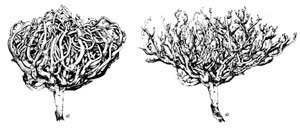
A quiet voice on the phone confirmed last night’s fears. My memory flashed to images of her first birth, where she was strong, singing mystic songs in labour. She leaned over a bed, holding onto a desert herb, the kaff Maryam, or "Mary's Palm." According to Arab tradition, the Virgin Mary clutched this herb in her hand while "suffering in childbirth", its branches unfolding as her labour progressed.

On some days, when I’m working with clients, we skim the surface of life, talking about the technicalities of birth, what to expect, our biology, logistics…

But on other days, we’re almost forced to delve deep into the spiritual meaning of this thing called “birth.”

Today, I made phone calls, sent emails, and searched for meaning like someone in the desert searches for water. I need the kaff Maryam in my hand…so I can help these women through the challenges of this week.

Just as I had read the book on Spirit Babies only yesterday, then attended a joy-filled birth, before the new week began to unfold… we are all given the tools to deal with these challenges in advance – miraculously. Our hearts just need to be open enough to hear the lessons as they arrive, to make sense of it all, and to remember that “the heart of life is good.”

Saturday, October 28, 2006

Duthies goes down a notch

Okay, I've been a Duthie Books fan all my life. It's an independent book seller in Vancouver, with well-read employees, a great book selection, etc. etc. I bought the new Zadie Smith novel, On Beauty, then headed to check out the pregnancy books, as usual. I headed to where they usually are...and stopped, mouth open... There was a massive product placement of the What to Expect When You're Expecting series (good only as doorstops), The Baby Whisperer (don't get me started!,) and The Caveman's Pregnancy Companion (Oh, dear! Do they really think men are happy to be treated like morons?) I had to walk out...

So, I popped into Chapters today to see how they were doing...and didn't find ONE What to Expect book, found a few Sheila Kitzinger books, and purchased two very obscure and interesting-looking pregnancy books (I'll let you know...) Here was a chain store with a selection that was certainly better than Duthies.

For a consistently good selection of pregnancy books, grab a chair and sit at Banyen Books on 4th Avenue. Now, if we could just get Tanglewood Books, with those wonderful creaking wooden floorboards, to stock amazing pregnancy books...then I'd be happy.

Monday, October 23, 2006

Groaning Cake


In our last book club meeting, we discussed The Birth House, by Ami McKay. We ate groaning cake, talked about birth, the medicalization of women's bodies at this most natural time, history, social change, and our own lives. We were strengthened by the stories of these women at the turn of the century in Canada, their sisterhood, and the quiet yet bold way in which they kept their commmunity together. I hope you read this book.

The tradition of the groaning cake at a birth is an ancient one. Wives' tales say that the scent of a groaning cake being baked in the birth house helps to ease the mother's pain. Some say if a mother breaks the eggs while she's aching, her labour won't last as long. Others say that if a family wants prosperity and fertility, the father must pass pieces of the cake to friends and family the first time the mother and baby goes to a public gathering.

2 1/2 cups flour
3 eggs
2 t. baking powder
1/2 cup oil
1 t. baking soda
1/2 cup orange juice
2 t. cinnamon
1/4 cup molasses
1/2 t. ground cloves
1 1/3 cups sugar
1 1/2 cups grated apple
1 t. almond extract

Sift dry ingredients together. Add apple. Beat eggs. Add oil, orange juice, molasses and sugar. Add to dry ingredients. Mix well. Add almond extract. Bake at 350F. for 35-40 minutes. Makes two 9x5 loaves or 18 muffins.

Wednesday, January 04, 2006

The Meaning of Pomegranates and Northern Lights


Birth imagery is everywhere, from the paradox of the pomegranate in ancient writings to the joyful and whimsical life-giving nature of the Northern Lights found in Native storytelling. Whenever I have been challenged by a birth, or face great joy or loss in our own family, I go to my books. Research is my way of coping with challenges. I haunt creaky-floored second hand bookstores, sit on the floor of the library, or google my way to new understanding.

This month, I started with Tomson Highway's prose, both profound and profane. His imagery of the spirit child who is formed in the Northern Lights and tumbles to earth is magical. There is a bubbling life-force in his words. Then I moved on to reading tales of Persephone and the pomegranate; stories of the potency of life. Seven stars on the tiara created a fetus. Seven seeds of a pomegranate forced the eternal union between Persephone and Hades, creating both life and death in the seasons. I seek connection in these writings...

"As its galaxies of stars and suns and moons and planets hummed their way across the sky and back, the Fur Queen smiled enigmaticaly, and from the seven stars on her tiara burst a human foetus, fully formed, opalescent, ghostly."
- Kiss of the Fur Queen by Tomson Highway

"A single fruit grew on that tree, a bright pomegranate fruit. Persephone stood up in the chariot and plucked the fruit from the tree. Then did Aidoneus prevail upon her to divide the fruit, and, having divided it, Persephone ate seven of the pomegranate seeds."
- The Golden Fleece by Padraic Colum

When I found myself attending my 600th birth on the same day that there was a loss in our family, I drew strength from the words that I had read. To help my client birth her baby who was posterior, a star-gazing child, I gave her images of tumbling and turning, slipping then sliding (thanks to Tomson Highway). Her baby finally tumbled from her body. The next day I bought a pewter pomegranate as a gift, to honour the lives both lost and found.

When I look at the birth books on store shelves, I am saddened by their lack of depth. But when I broaden my search to include ancient texts, modern literature, history books, poetry, and the oral traditions of other cultures, I am inspired. I hope that, in turn, my explorations help others to find meaning.

In memory of the spirit baby...

Thursday, October 13, 2005

CBC Radio is back!


What’s the connection to this blog? To birthing and mothering? Well, CBC Radio has been the backdrop to my life. It formed the beautiful predictable ritualistic structure for my mothering at home.

CBC Radio 1 has brought form to my life, acting as “comfort food for the mind” when I was a child, bringing sanity to my early years as a new mother, and helping me to parent young adults consciously and conscientiously. So, rather than encouraging new parents to seek out parenting information from "The Baby Whisperer" or other books that address structure and scheduling, I just encourage new mums to stave off loneliness, provide intellectual stimulation AND provide structure by simply turning on the radio.

“As it Happens” meant that it was dinner time when I was a child. “Morningside” with Peter Gzowski brought structure to my mornings when my own children were small. The sound of the beeps which signal 10am meant that I should put the kettle on for a relaxing cup of tea. The noon news reminded me to put aside the playdough and make lunch for us all. The Wednesday morning political panel of Stephen Lewis, Eric Kierans and Dalton Camp was always on the radio in the car as I drove to my midwife appointment during my second pregnancy. Once my children became readers, I would wait, pen in hand, to listen to Michele Landsberg's (incidentally, Stephen Lewis' wife) book recommendations. And in more recent years, some of my clients at home or hospital have turned on CBC Radio 1 to bring some predictable structure to their labour. One woman deep in labour told all the staff to be quiet at noon on a Sunday, just so that she could listen to Stuart McLean tell the Christmas Turkey story on “The Vinyl Cafe,” in between contractions.

Research has shown that one of the best predictors of superior brain growth and development in children is the amount that a parent talks to a baby during the first year. I didn’t read, sing, and chatter to my children to “make” them into something, but to honour them as the complete little people that they were. So, I’d be working in the kitchen, listening to a radio documentary, and asking my three month old daughter what her opinion was. In the early 1980’s I remember talking to her about a newly discovered disease called AIDS and whether the Russians invasion into Afghanistan would precipitate a global war. I remember feeling so strongly that I was helping my children to grow up as critical thinkers - even at such a young age. And they would look at me with such knowing looks, like all of this wasn’t news to them...

I also remember cuddling up in afternoons, listening to the presentation of the Classical Kids Series of radio plays, like Beethoven Lives Upstairs and Mozart’s Magic Fantasy. I knew I was encouraging my children’s imaginations. In a world increasingly full of speeding images on TV, and the manic fever pitch of video games, I could provide my children with the gift of visual images that can never be duplicated. I knew that each child curled around me was seeing a totally different scene. Perhaps that led to their love of theatre, personal expression, and intellectual bravery.

So, it was with great anticipation that I turned on the radio early this week, waiting for live radio once again. I was looking forward to a new season of “As it Happens” and “Sounds Like Canada”. I was looking forward to listening to the CBC overnight service (a doula’s life involves a lot of driving at 2am). And what was the first thing I heard when I turned on CBC Radio 1 for the first time in months? An advertisement for Stephen Lewis’ October 18th "Race Against Time" Massey lecture at the Chan Centre. I must go listen to him - and take my family.

Things haven’t changed a bit.

Friday, July 29, 2005

Bountiful Beautiful Blissful


It's August, so I am leaving for a month in Scotland without my pager...what an amazing concept. Being on call 24/7 can take its toll. Think of those lucky ones who are due in September. They will receive a fully rejuvenated me! And I do hope I don't come home to find my backup was busy with everyone! Fingers crossed!

While I'm away, I hope each of you takes some time to browse the shelves at Banyen Books. My favorite book of 2005 is "Bountiful, Beautiful, Blissful", by Gurmukh. Don't be scared off by thinking it may be too flakey - it's not, and incorporates many of the words and concepts that I use when working with pregnant and labouring women (I even sang "Row, row, row your boat" to myself during my second labour in 1987). When I read Gurmukh's book I feel as if she and I know each other intimately, and have been using each other's phrases for years. So, have a good read!

- Jacquie Munro, Vancouver Doula

Thursday, June 23, 2005

So, what’s the best birth book to read?


In 1982, I was obsessed with everything to do with babies. I ducked into every book store for months before I got pregnant. You’d find me sitting on the floor by the Pregnancy and Childbirth section, surrounded by books. These weren’t “Earth Mother” books. I started with the encyclopedic books, looking for the ones authored by doctors with the most letters behind their names... FRCP, etc. You know, the books which scare you half to death with descriptions of all possible things which can go wrong. Then, I went to the university medical bookstore to look at obstetric textbooks. I even studied an obscure Swiss method of breathing for labour, which I photocopied from the main library. This method left me exhausted, out of breath, and very, very confused. It didn’t help when my husband and I went to prenatal classes and pretty much “failed” breathing. And when the nurses at the hospital asked us what our “birth plan” was, we just said “to have it go well”, and then I asked if I could blow-dry my hair before the obstetrician started my induction. Yikes! Over-prepared with book knowledge....under-prepared with inner knowledge.

Then, when I was pregnant for the second time, I found that reading C.S. Lewis’ “The Lion, The Witch, and the Wardrobe” to my daughter brought so much more inner peace and contentment. I was working with midwives this time, and my visits were filled with laughter, and great book recommendations. I read Elizabeth Noble’s “Childbirth with Insight” which teaches you to trust your inner wisdom, Ina Mae Gaskin’s “Spiritual Midwifery”, which, once you get past the now-quaint 60’s language, is a deeply truthful account of birth, and anything by Sheila Kitzinger. My midwives reminded me that I didn’t need books to teach me how to give birth. They said I needed to trust my body, and to visualize a positive outcome. So, this time, you’d find me sitting with my daughter on the floor of the Children’s section in the bookstore. I bought books with beautiful illustrations, mystical children’s books, books which fed our souls. And when I went into labour, I trusted my body, danced with my husband, and experienced childbirth with joy.

After what seems a lifetime as a doula, I spend more time discussing recent book group titles with my clients, than recommending so-called “birth books”. Most clients say that they’ve not read any birth book which truly speaks to them and their experience. So, I recommend books which will help them through their journey. One woman, who was an engineer, had to leave work because of high blood pressure, and wanted to know how to slow down and face the looming prospect of 5 weeks on bed-rest. I asked her husband to pick up the first of the “Outlander” series by Diana Gabaldon, a good historical “bodice-ripper”. After a week, she called to say she had finally found a book which could keep her glued to her seat...and “what’s the next title in the series!” By the time she went into labour, she had slowed down, and, in the process, learned so much about herself.

When I walk into clients houses, the first thing I look at are their bookshelves. I can tell so much about each couple by seeing what books are prominently displayed. Ah, she must have been an English major... Ah, he’s an engineer interested in science fiction. And there, on her bedside table, is a copy of Harry Potter. One couple were concerned about their baby being born “different”. Should I mention “The Chrysalids” by John Wyndham, a science-fiction novel which explores the nature of “difference”?

Should I recommend “The Giver” by Lois Lowry, to people who are looking for the “perfect pain-free birth”? In this children’s book, “Jonas’s world is perfect. Everything is under control. There is no war or fear or pain.” Once I broke free of the confines of “birth books”, I was free to help women prepare for birth in a way which honours them as individuals, which works with them in a much more holistic way.

Birth rips off all blinkers, exposes us for who we really are, forces us to face others without masks. We cannot “prepare” for this encounter with ourselves. We can only explore our inner selves as much as possible before the labour comes, and trust that birth is something we know on a basic level. I truly believe that reading for pleasure helps us to achieve a trance-like state, and, allows us to see ourselves mirrored within the pages of the book.

See what books speak to you...

- Jacquie Munro, Vancouver Doula